What I Wish I Knew as a First-Year Teacher
Oct 9, 2025

Kas
This is a great question and of course, now a few years into my career, looking back, there are a lot of things I wish I knew. But to be honest, I think most of us who are a few years into education could say the same. There’s probably an endless list of things we wish we’d known at the start. That’s the whole point of learning everything is new in hindsight. You look back and think about what you’d do differently, but eventually you’re thankful for the setbacks and mistakes you made. They’ve given you the experience and skills you have now.
With that being said, here are a few things I think will be beneficial for any first-year teacher starting out. This isn’t evidence based or overly structured its more general advice. Things you probably already know, but sometimes it’s good to hear them again as reminders. These reminders can help you stay on a path that supports a long and positive career in education.
You Don’t Have to Know Everything
In Australia, we study for four years to become teachers, covering a lot of theoretical components of education though not all of them. While that foundation helps, what really prepares you for teaching isn’t the theory itself, but the practical experiences you get through university and the reflection that comes with them. A great mentor teacher can make a world of difference. Aligning with someone experienced and supportive helps you develop those real-life teaching skills you don’t get from textbooks.
I’ve found that you engage with theory more deeply after you’ve mastered some of the basics like classroom management, being organised, and adapting to school life. There’s definitely pressure on early career teachers to feel like they need to know it all. You come into the profession eager, wide-eyed, and passionate after four years of study, and you expect to hit the ground running. But that pressure is often self-imposed and unrealistic. Some teachers adapt quickly to the classroom, but many do so through unsustainable habits working every weekend, every night, and running themselves down within a few weeks or terms.
40% of ECTs feel incompetent in lesson planning, with university and placements offering inadequate preparation (Black, Hine, & Lavery, 2023). Mentoring in schools often lacks leadership, guidance, and induction/training, contributing to stress and inadequacy (Black, Hine, & Lavery, 2023).
It’s okay to ask for help. It’s okay to admit you don’t know something. It’s okay to borrow and share resources (with permission). In fact, I’d recommend it. You don’t need to reinvent everything from scratch having that support early on frees up mental space so you can focus on what matters most: your teaching and classroom management.
You’ll also learn so much from experienced colleagues. Their way of doing things may not be perfect, but it works in their context. Observe, adapt, and then add your own flair once you’ve found your footing. And that mindset never really changes whether you’re in your first or tenth year, there’s always someone you can learn from. Sometimes it’s not even the most experienced teacher; it might be someone newer who brings a fresh perspective or a specialised skill from a previous career.
Ultimately, teaching is collaborative. Ask for help, learn from others, and don’t isolate yourself.It’s how you grow, build relationships, and eventually find your confidence and rhythm in the classroom.
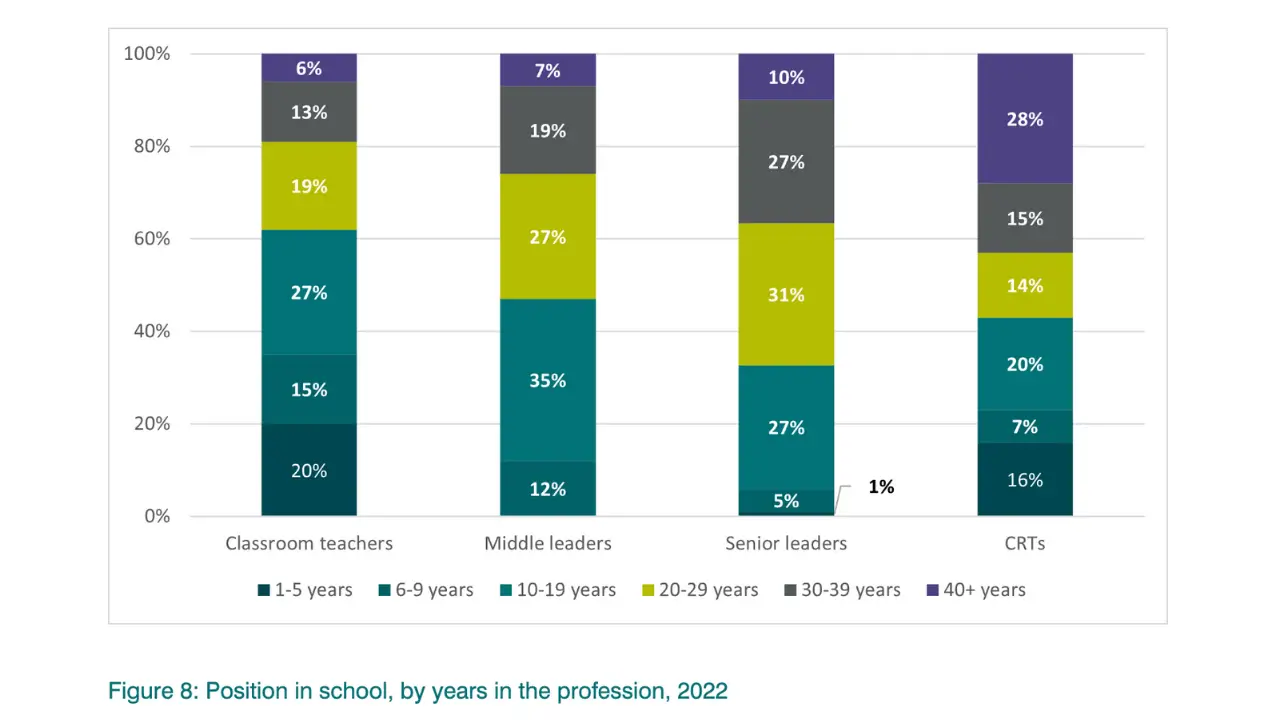 (AITSL, 2023)
Relationships Matter More Than Resources
This point ties directly into mentoring and collaboration. Any experienced teacher will tell you: relationships are at the heart of everything in education. The relationships you build with students, parents, peers, and leadership will help you far more than any single resource or behaviour strategy. Of course, evidence-based management strategies are important, but over time you realise that relationships form the real foundation of your classroom environment.
Be Visible and Approachable
Make yourself visible. This can be tricky as a new teacher especially when you’re still finding your place. Strangely enough, many of us feel perfectly comfortable speaking in front of thirty students, yet get anxious chatting with adults in the staffroom. That’s normal. Still, try not to isolate yourself. You don’t need to be in the staffroom every day or force awkward interactions, but when the opportunity comes up to chat or connect, take it. You never know when you’ll need support or when an opportunity might arise simply because someone knows you and values your presence.
Build Respectful, Professional Relationships
With students, relationships are key. Especially for younger teachers, it’s important to establish professional and healthy boundaries early. Being young and relatable can be an advantage you understand their world, their music, their slang. But familiarity can quickly blur into friendship if you’re not careful. Your role isn’t to be their friend it’s to be friendly but firm. Students need to know you care about them but also respect your boundaries. That balance allows for fun, laughter, and connection, but also authority and structure when needed.
The same applies to parents. Many are wonderful people you could easily get along with outside of school but you must maintain professionalism. If a parent criticises another teacher or school policy, don’t join in, even if you agree privately. You represent your school and colleagues, and crossing that line can cause tension or even risk your job. Establishing those boundaries early helps protect your integrity and keeps communication healthy and respectful.
Boundaries Are Healthy, Not Selfish
A teacher shortage is looming in Australia. Early career turnover is high, with many in their first five years (AITSL 2020) reporting burnout, stress, and pressure. Globally, up to 50% of Early Career Teachers (ECTs) leave within five years, with around 40% in Australia and Finland
I’ve written more in-depth about this in another article on healthy workplace boundaries, but it’s worth touching on here because boundaries are hard to set and even harder to keep. In teaching, there are no fixed work hours. As much as we try to keep to them, the reality is that teaching often spills beyond 9-3. There are times in my career where I’ve been great at maintaining boundaries, and other times where I’ve really struggled. It depends on your role, your class, and the time of year.
I’m not suggesting you should be working weekends or late nights quite the opposite. Try to establish a routine that includes rest and personal time. Boundaries aren’t just about saying “no.” Sometimes they’re about saying “yes” to the things that keep you grounded. For example, if you play sport, your boundary might be that you never skip training, no matter how busy school gets. Or it could be that you don’t make work calls after 5 p.m.
Think of boundaries as healthy habits rather than restrictions. Many early career teachers take work home every night and research shows around 70% of them do 20-30 hours of extra work each week. From my experience, it’s often even more. The problem is, even when you close the laptop, your mind is still in “work mode.” So when you start your teaching career, take some time to write down your non-negotiables. Adjust them each term as needed, but start with a plan. Without one, burnout will sneak up quickly.
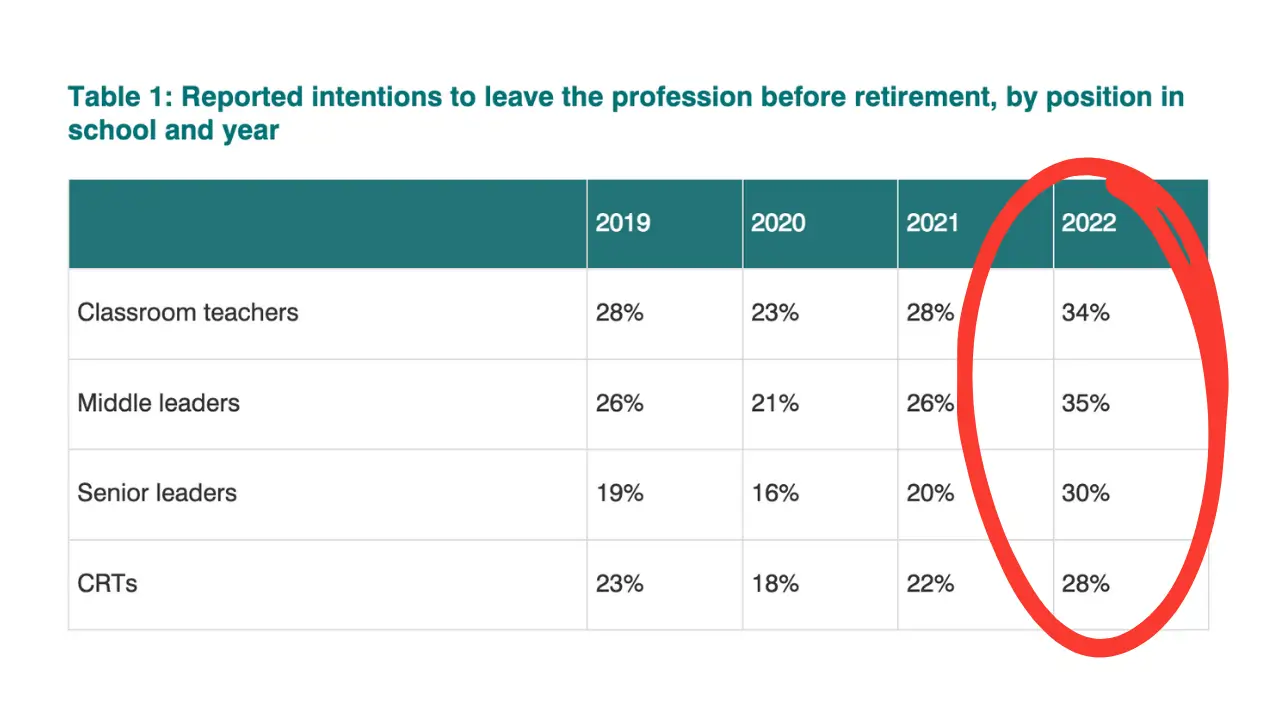
Most classroom teachers (92%), middle leaders (91%) and senior leaders (92%) who reported their intention to leave the profession before retirement selected workload and coping factors as reasons for considering leaving. These factors have consistently ranked first over time, as the top considerations for peoples’ intentions to leave the teaching profession before retirement. (AITSL, 2023)
Australia (like many countries) is facing a teacher shortage crisis, and much of that comes down to workload and lack of balance. The truth is: the best teachers aren’t the ones who do the most work -they’re the ones who work smart, stay rested, and maintain perspective. Set boundaries, hold yourself to them, and protect your energy. You’ll not only last longer in the profession-you’ll enjoy it more and model healthy habits for those around you.
 (AITSL, 2023)
You’ll Never Stop Learning
And my last point- you’ll never stop learning. It’s quite self-explanatory, and I think this applies to any career: you’ll never really stop learning.
Change Is Constant
In teaching, this is especially true. As you move through different roles, schools, and year levels, you’re constantly adapting. Every year you get a new class, and even if you stay in the same year level, the students will always be different. With that comes the need to learn and adapt to the diverse needs of your classroom, your school, and its policies. Even if you stay in the same school for many years, things around you will still change. Leadership changes, colleagues come and go, and policies shift. Schools evolve and lately, it feels like that evolution is happening faster and faster. There’s so much change happening in education, and we all have our opinions on that. Some areas we wish would change quicker, and others we feel are changing too quickly. But regardless of how we feel, education systems are adapting rapidly to a modern, tech-driven world.
Technology and Adapting to Change
A great example of this is AI. It’s been around for a while, but it’s really taken off in the last couple of years particularly in 2024 and 2025. For anyone reading this later on, this has been the period where it truly started booming. Students are using it, and schools are figuring out how to implement and adapt to it.
Some schools are embracing it, experimenting with new ways to integrate it into learning, while others are choosing to hold back. The same is happening across universities, primary schools, and high schools. That’s just one example of how quickly schools and education systems are adapting. For the most part, these adaptations are positive. They’re attempts at improvement and that’s always better than staying stagnant.
Growth Mindset and Lifelong Learning
Beyond big system changes, you’ll always be learning new things in your day-to-day job like the software your school uses, the processes for assessment, or the way things are done within your team. When you accept that you’ll always be learning (and that everyone else will be too), it helps take the pressure off. You don’t need to be an expert in everything. You’ll find that you naturally get really good at some things, while others might take longer or not come as easily. That’s completely okay.
Over time, you’ll discover your niche the area or style that really suits you and you’ll excel in it. Some educators are all-rounders who enjoy a bit of everything. Others are highly specialised and prefer to focus deeply on one area. Neither is right or wrong. You just need to figure out what works best for you.
Exploring Opportunities
If you’re struggling to find your niche, I’d really encourage you to explore as many opportunities as possible. That might mean trying a different year level, taking on a new subject, or even moving to a new school or system. Always keep learning, because after five or ten years, you’ll want to have a variety of experiences on your resume. That diversity makes you a stronger, more well-rounded teacher. From my own experience, schools value educators who have adapted to different environments and ways of working. That variety of experience gives you a richness you can bring to any school site.
If you stay in one place for too long, you might become excellent at that specific set of routines and skills but you miss out on seeing how other teachers and leaders do things. I’ve moved schools a few times myself, and every time I’ve learned something new and valuable. It also makes you appreciate things you had in previous schools that you might have overlooked at the time. When those things aren’t present in your new setting, you realise how important they actually were and that gives you something valuable to bring to your new environment.
Take the Pressure Off
So please, take the mindset that you’re always learning. You don’t need to be an expert in everything, and no one expects you to be. Take the pressure off yourself and take your time. In Australia, an early career teacher is generally considered to be in their first three to five years. Those years are designed for learning, adapting, and becoming the best version of yourself as a teacher. Focus on longevity and wellbeing. You have time. Don’t rush. It’s about building a sustainable, fulfilling career one where you’re happy, balanced, and a positive presence in your workplace.
Across all positions in schools, the order of the top three reasons affecting teachers’ intentions to leave the profession prior to retirement have not changed over time. Factors relating to workload and coping (work/life balance, mental health and wellbeing, high workload)
(AITSL, 2023)
In Summary
Being an early career teacher is no easy task. Walking into a new school, meeting students, parents, colleagues, and leadership, and working in such a collaborative environment can be overwhelming. It takes time often years to truly find your rhythm, or to discover a school that aligns with your personality, values, and teaching style.
The good news is that in Australia, there are plenty of opportunities right now. With the current teacher shortage, schools across all sectors government, Catholic, and independent are looking for passionate educators. So, if your first experience isn’t what you hoped for, don’t be discouraged. There are so many incredible schools and leaders out there; sometimes it just takes a few tries to find the right fit.
Teaching is challenging, but it’s also deeply fulfilling. You’ll meet some of the most generous, skilled, and inspiring people in the profession. While not every day will feel perfect, most days you’ll leave knowing you’ve made a difference and that’s something special. Even when it doesn’t feel like it, your students are benefiting from your presence, care, and persistence. What you do matters.
Look after yourself and each other. Support your colleagues, share your experiences, and lean on your network when you need to. You are part of the next generation shaping education’s future and that’s something to be proud of.
Sources:
- Australian Institute for Teaching and School Leadership. (2023, September). Australia’s teacher workforce today. https://www.aitsl.edu.au/research/spotlights/australia-s-teacher-workforce-today
- Black, D., Hine, G., & Lavery, S. (2023). Exploring challenges faced by early career primary school teachers: A qualitative study. The Australian Journal of Teacher Education, 48(8).https://doi.org/10.14221/1835-517x.6147
- AITSL. (2020). The rising administrative burden in Australian schools. Retrieved from Australian Institute for Teaching and School Leadership website: https://www.aitsl.edu.au/tools-resources/resource/shifting-the-balance-increasing-the-focus-on-teaching-and-learning-by-reducing-the-burden-of-compliance-and-administration
Helpful Resources:
- Fundamental Movement Skills: Flash Cards + Circuit
- How to create a better work life balance?
- Why are minor games important for students to learn?
- Emotional Regulation Posters
- Assessments for P.E- Ready to go
- What are invasion games?
- First time teaching P.E? Heres where to start!