How to Use Observational Assessments Effectively in Physical Education
Aug 16, 2025

Kas
Observational assessments are a broad category of assessment that generally involve an assessor watching a participant undertake a set of tasks. These tasks typically can not be assessed orally or in a standard written format like most types of other assessments and thus need to be observed in action or during a demonstration. Observational assessments are widely used in school settings for practical subjects such as P.E or Drama/ Dance/ Arts due to the performance based nature of these subject areas.
For the most part (and I’m sure we’ve all come across this), observational assessments can sometimes lead practitioners to simply look at a student and make a judgment about what grade they ’think’ the student deserves. This is not what we are advising or encouraging in this article. In fact, evidence-based assessment strategies and sound teaching practice tell us not to guess a student’s grade. Instead, we should use tools that guide our grading process to ensure consistency, clarity, and fairness for all. This will ensure our outcomes align with our curriculum and intended learning goals.
Like any assessment type, an observational assessment should include guidelines, structure, a rubric and all the key components necessary for an effective assessment. This allows for moderation to take place even with assessments that are observational in nature. This type of assessment relies more heavily on professional judgment than others, as we make some interpretations based on what we see but importantly the structure is there to guide you in making the most accurate and best decisions possible whilst providing students with the greatest chance of success.
An observational assessment is a test where an observer watches a participant perform a task and rates their performance, making it possible to evaluate skills or abilities that are difficult to measure using “traditional” assessments. Rather than relying on standard assessments which often only test knowledge recall observational assessments (similar to performance-based testing) evaluate a student’s abilities in an authentic environment.
Source: A Complete Guide to Observational Assessments | Questionmark

When Are Observational Assessments Used And By Who?
In this article we are discussing observational assessments for educators and specifically for physical education teachers. In order to form a general understanding of this assessment tool we will discuss how it is used across various professional domains.
Observational assessments are widely used across various professions where understanding behaviour, skills, or development in real-world settings is essential. In education, teachers and special education professionals observe students to assess learning styles, social interaction, and developmental progress. Healthcare providers like occupational therapists, speech-language pathologists, and nurses use observation to evaluate patients’ abilities and monitor their progress. In psychology and mental health, clinicians and behavioural therapists rely on observational techniques to diagnose and support individuals, especially children with developmental needs. Social workers, particularly in child protection and schools, observe behaviour to inform interventions and support plans. Beyond these fields, observational assessments are also common in areas like human resources, law enforcement, sports coaching, and even anthropology, where understanding real-life behaviour is key. Overall, observation is a powerful assessment tool across many disciplines because it provides direct insight into how individuals function in natural environments.
What They Might Be Used For?:
- Reading Fluency
- Artistic Performances
- Observing Social Skills
- Mobility and Balance
- Communication Skills
- Team work and collaboration
- Interactions between parents and children
Who Uses Them?:
- Teachers
- Special Education Professionals
- Educational Psychologists
- Occupational Therapists
- Speech-Language Pathologists
- Clinical Psychologists
- Behavioural Therapists
- Social Workers
- Nurses
- Athletic Coaches
How I Use Observational Assessments
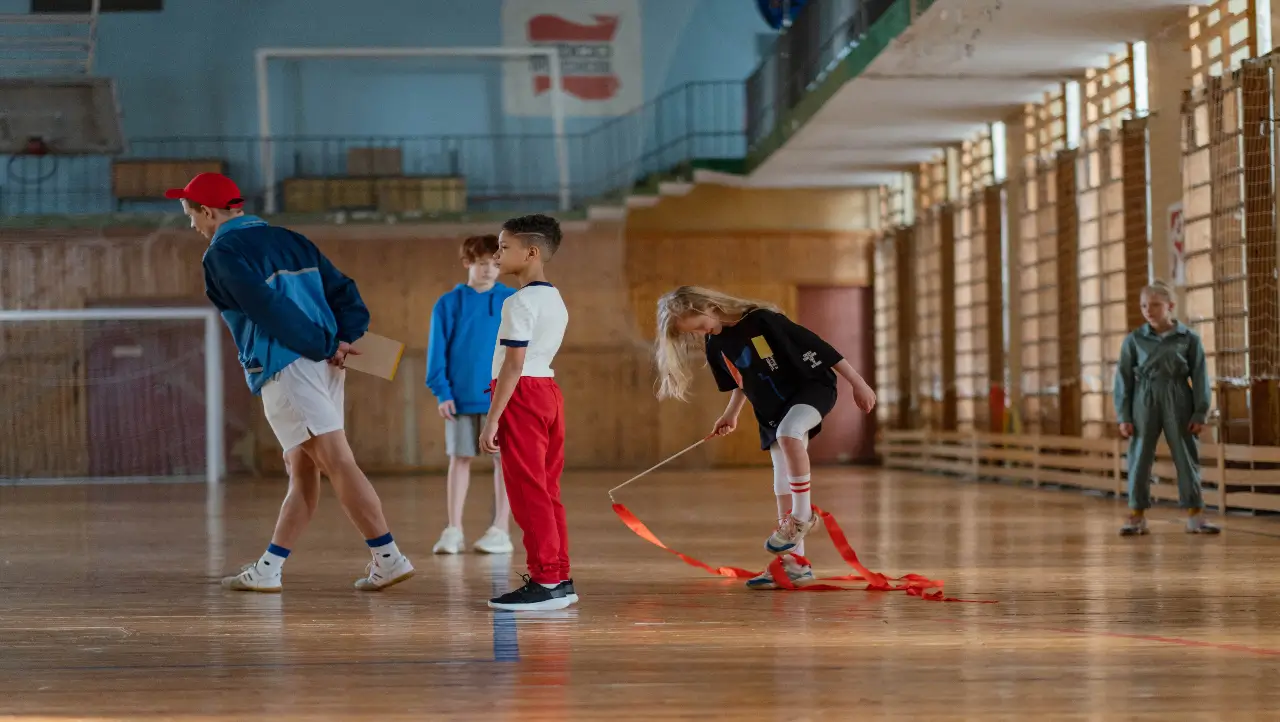
I use observational assessments for a range of situations, sometimes for pre-assessments (data collection) or in units of work where I am focusing on simple key outcomes. One example would be assessing fundamental movement skills (FMS) for primary school students. For primary students, I use this assessment to ensure they are able to demonstrate competency in a chosen fundamental movement skill during an activity and be able to use it in an appropriate context. I’m not looking at the extent of their ability to perform the skill, nor focusing on in-depth tactical or technical outcomes such as measuring the height of their jump, or the distance of their throw as an example. It’s simply a tool to ensure they are satisfactorily meeting the requirements of the activity or task related to their FMS skill and the curriculum outcomes.
This assessment will also include social and emotional outcomes such as:
- Respectful behaviours
- Following rules
- Fair play
…and other social/emotional learning objectives that are integrated into most (if not all) physical education curriculums.
For example: (Simplified)
- If a student is following the rules, that’s a simple tick.
- If they are playing fairly before and after the game, that’s a tick.
An observational assessment is great for these simple outcomes that don’t require deep analysis, unlike an assessment tool such as a GPAI (Game Performance Assessment Instrument), which looks more closely at skill application in a game context, often focusing on tactical understanding and decision-making. Observational assessments are key for assessing these more straightforward objectives.
An observational assessment can take different forms. It might be:
- A simple checklist with outcomes and tick boxes
- A scale with check boxes (e.g., 1-2-3), where:
- Self reflection tool
- Peer assessment tool
These are examples of how flexible or detailed observational assessments can be. This format gives assessors the flexibility to align the tool with the curriculum focus area, while still offering structure to guide lesson observations. It removes ambiguity, allows for clear feedback, and increases transparency for students and their families about what they are expected to achieve in the lesson.
This transparency:
- Improves student success
- Adds rigour to your P.E. practice
- Builds trust with parents and leadership
What Shouldn’t Happen
Many P.E. teachers still make observational judgements without any rigour or structure. This is an outdated and uninformed method. I’d even argue it’s not really an assessment just an informed guess. That’s not the standard we should be holding ourselves to as educators.
Yes, professional judgment is important, but guessing or assessing without a structured method is unacceptable in education.
These kinds of assessments:
- Don’t provide clarity to students
- Don’t provide meaningful data for reflection
- Undermine your credibility as an educator
When a parent, leader, or colleague asks why a student received a certain grade, being unable to provide clear, data-backed reasoning makes it look like a guess. And that’s a problem.
Everything we assess should be tied to clear outcomes that can support us when we need to justify grades. This situation is increasingly common in modern teaching. Personally, I always collect data and maintain full transparency with students. I encourage them to ask for feedback. It helps them understand how to improve, and it helps me refine my own practice and assessment methods.
We need to carry ourselves as professionals and that includes how we approach every assessment, even the ones that are less formal or simple in nature. Wherever possible, our assessments should have rigour.
This:
- Protects us as teachers
- Provides equity and clarity for students and families
And that is important.
Observational assessments when designed and implemented with clear guidelines and rigour offer significant benefits. They provide authentic insights into student skills and behaviours in real-time, allowing for meaningful feedback that supports growth beyond simple knowledge recall. These assessments promote transparency, fairness, and consistency, helping educators make informed decisions backed by evidence. Relying on informal judgments without structure undermines credibility and fails to give students or families a clear understanding. By embracing well-structured observational assessments, teachers uphold professional standards, foster equity, and create a positive learning environment where students can thrive and know how to progress.
Helpful Resources:
- Fundamental Movement Skills: Flash Cards + Circuit
- Coloured Cones For Teaching P.E! (Amazon)
- Coloured Sit Spots for behaviour management! (Amazon)
- Awesome Teacher Planner! (Amazon)
- How to create a better work life balance?
- Why are minor games important for students to learn?
- Emotional Regulation Posters
- Assessments for P.E- Ready to go
- What are invasion games?
- First time teaching P.E? Heres where to start!